
“Canciones Neogranadinas” and the Latin American Villancico: Domestic Practices and Transregional Networks (1850–1930) (ARLAC)
Chairs: Mariantonia Palacios (Universidad Central de Venezuela and Instituto Tecnológico Metropolitano, Medellín, Colombia); Carlos Caballero Parra (Instituto Tecnológico Metropolitano, Medellín, Colombia)
Organized by the ARLAC-IMS Working Group “The Villancico in Hispanic America.”
This presentation examines the anonymous mid-nineteenth-century musical manuscript Canciones neogranadinas, villancicos y responsorios, held at the Archivo Perdomo of the Luis Ángel Arango Library (Bogotá, Colombia). Comprising a singing manual, secular songs, and a collection of religious pieces scored for voice and guitar (or bandola), this document serves as an exceptional testament to the blurred boundaries between orality and literacy, and between the sacred and the profane in domestic music-making. Furthermore, it evidences the extrapolation of ecclesiastical repertoire into nineteenth-century salons.
A comparative analysis of this manuscript with other regional sources—such as the manuscript by José María Ardila Vásquez (Venezuela) and the Manual de organistas y cantores by Manuel María Rueda (Colombia)—allows us to establish links between musical practices across the South American continent, specifically within the Northern Andean region. These concordances attest to a vibrant and uninterrupted practice of the villancico genre that extends beyond the nineteenth century, persisting within both liturgical and salon contexts in Colombia, Ecuador, and Venezuela well into the twentieth century.
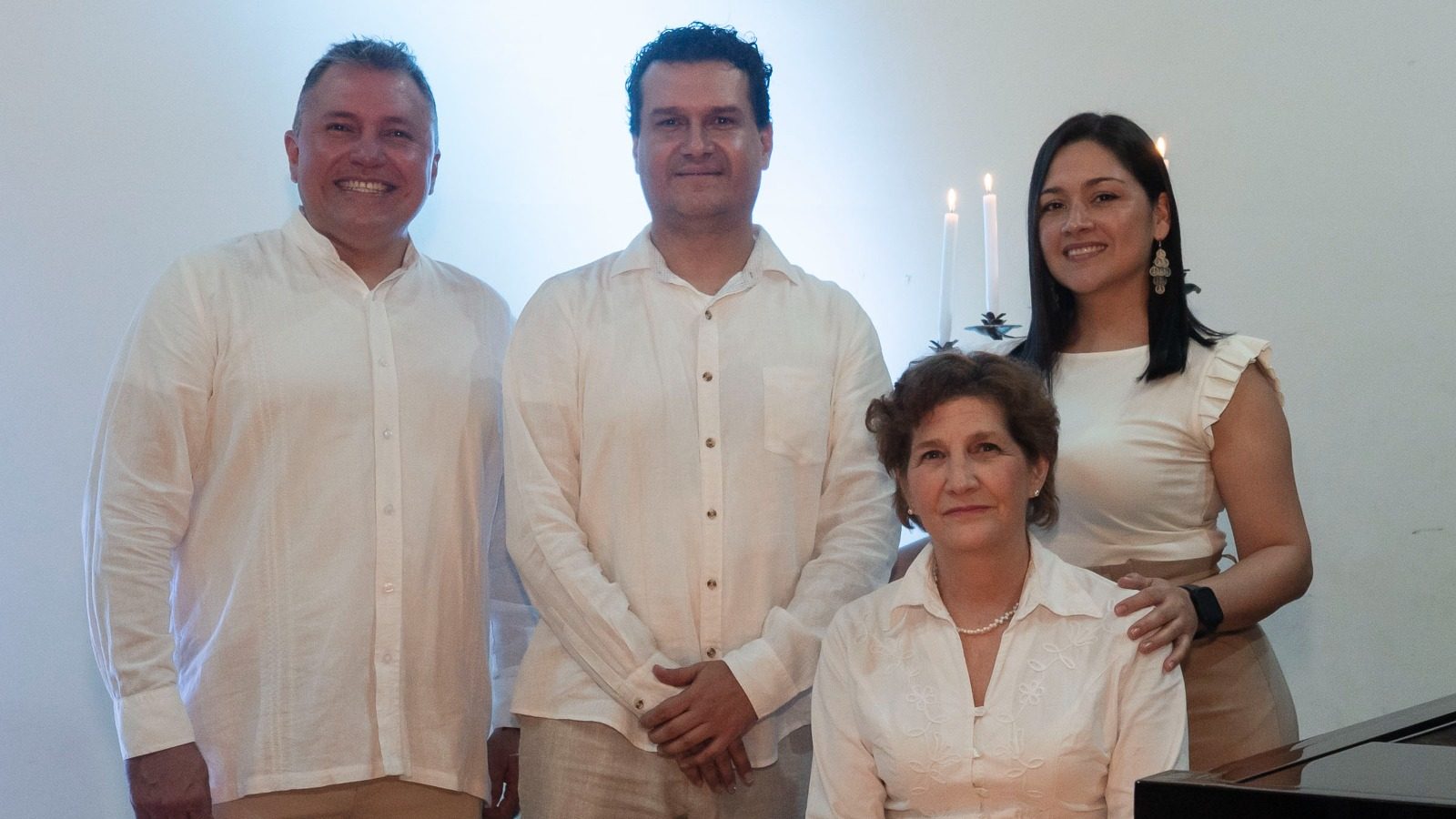
Based on a critical study of these manuscripts—characterized by non-standard notation and abundant marginalia, erasures, and amendments—we offer an interpretive proposal grounded in the premise that these are “open texts,” where the score functions as a flexible guide for performance rather than a fixed object. Transcriptions and arrangements by Juan Francisco Sans for two voices, piano, and guitar—which incorporate the vocal methodology found in the Canciones neogranadinas manuscript—form the repertoire performed by La Lira Antioqueña. This ensemble’s name pays tribute to the eponymous string group founded in Medellín in 1903, which recorded over 75 discs of regional vocal and instrumental music with the Columbia Phonograph Co. in New York. This project seeks not only the recovery of sonic heritage but also to critically examine the reception and preservation of Latin American vocal music within the framework of contemporary musicology, performance studies, and Historically Informed Performance (HIP).This session will include a performance by La Lira Antioqueña, featuring Mónica Herrera (mezzosoprano), Jamir Mauricio Moreno (tenor), Carlos Caballero Parra (guitar), Marianonia Palacios de Sans (piano), and Jorge Mario Valencia (recording artist).
About the Performers
La Lira Antioqueña
Mariantonia Palacios de Sans, piano and presenter
Mariantonia Palacios de Sans is a Caracas-born musician trained as a pianist and composer in Venezuelan conservatories. She holds a Master’s degree in Latin American Musicology (Universidad Central de Venezuela) and a Magister Artium (Universidad de Costa Rica). She is a full professor with over forty years of experience as a teacher and researcher in Venezuelan universities and at the Instituto Tecnológico Metropolitano in Medellín. She is the former director of the School of Arts, the Choir of the Teatro Teresa Carreño, and the National Opera Company of Costa Rica, as well as the former coordinator of Yamaha Academies in Venezuela, Costa Rica, and Colombia. She is also a radio producer and presenter in Venezuela. She has received national and international awards for her research and artistic work and has recorded several CDs as a pianist featuring repertory derived from her research.
Mónica Herrera, mezzosoprano
Mónica Herrera is a faculty member in the Music area of the Musical Informatics program at the Instituto Tecnológico Metropolitano, singer, and researcher. She holds a degree in Music Education with an emphasis in popular singing from the Universidad de Antioquia, a Master’s degree in Digital Arts, and a degree in Musical Informatics from ITM. She has published articles on voice studies and participated in several recording projects. She is currently a member of La Lira Antioqueña as mezzosoprano.
Jamir Mauricio Moreno, tenor
Jamir Mauricio Moreno is a full-time faculty member at the Instituto Tecnológico Metropolitano (ITM). He has taught at the Universidad de Antioquia, Universidad Adventista, and Universidad Pontificia Bolivariana. He holds a degree in Music Education, a specialization in Arts (Composition), and a Master’s in Cultural Management. His work includes pedagogical keyboard methods, children’s music recordings, mobile music software, and a research book on Marta Agudelo Villa.
Carlos Caballero Parra, guitar and presenter
Carlos Caballero Parra holds a Doctor in Arts (Universidad Politécnica de Valencia), Master’s in E-Learning, specialist in Audio Postproduction, and is a professional guitarist (Universidad de Antioquia). He is currently Professor and Dean of the Faculty of Arts and Humanities at ITM. His research focuses on sound heritage and music production. He has presented at AES, ASARP, and IASPM-AL conferences and performs as guitarist and vocalist with Afrosound and La Lira Antioqueña.
Jorge Mario Valencia, recording artist
Jorge Mario Valencia is an electronic engineer (Universidad Pontificia Bolivariana) and holds a Master of Arts in Music Technology (University of York, UK). He currently teaches and conducts research at ITM in music production, signal processing for the arts, and sound design. He also works with Polyphonic Laboratorio de Sonido. His research focuses on technological tools for music production.